THE EVIL of Dr FAUCI (Dr Death) he should be behind bars permanently and used for medical experiments like he did to others
- Graham Healy

- Aug 1
- 5 min read
THE EVIL of Dr FAUCHI (Dr Death) he should be behind bars permanently and used for medical experiments like he did to others including African children and orphans in USA all revealed in the book "The Real Anthony Fauci " by Robert Kennedy Jr. By Graham Healy Sat 1/8/26 **According to Robert F. Kennedy Jr.’s 2021 book *The Real Anthony Fauci: Bill Gates, Big Pharma, and the Global War on Democracy and Public Health*, Anthony Fauci is portrayed as a long-serving, highly powerful federal health official whose career (especially from the AIDS era onward) centered on expanding bureaucratic power, partnering with pharmaceutical interests, and prioritizing certain patented or industry-favored approaches over alternatives.**
The book tracks Fauci’s rise “from his start as a young public health researcher and physician through his metamorphosis into the powerful technocrat.” It states that he began occupying various posts at the National Institute of Allergy and Infectious Diseases (NIAID) in 1968 and has served as its Director since November 1984—spanning roughly half a century as what Kennedy calls “America’s reigning health commissar.” In that role, Fauci controlled a large annual budget (described as about $6.1 billion in taxpayer funding) that, per the book, allowed him to shape research priorities, influence journals, universities, hospitals, and scientists, and effectively dictate much of the direction of biomedical research.
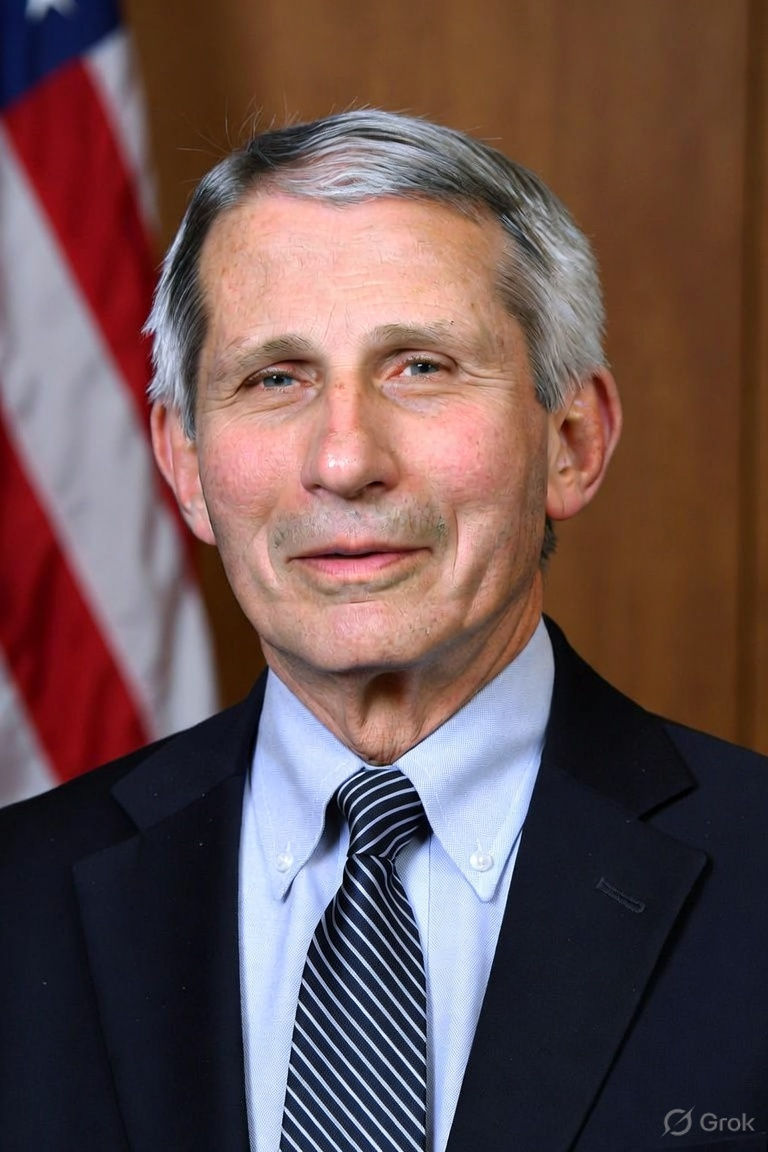
Kennedy’s narrative emphasizes that Fauci “launched his career during the early AIDS crisis by partnering with pharmaceutical companies to sabotage safe and effective off-patent therapeutic treatments for AIDS.” The book claims he orchestrated “fraudulent” or ineffective studies, pressured the FDA to approve a “deadly chemotherapy treatment” (AZT) that he allegedly knew was of limited or no value against AIDS, and enabled experiments involving impoverished and minority (including foster) children with toxic AIDS and cancer chemotherapies, which Kennedy characterizes as illegal and abusive. It also discusses Fauci’s role in earlier episodes such as the 1976 swine flu response as an early lesson that pandemics (real or exaggerated) expand agency power and industry wealth.
The book further describes a partnership beginning around 2000 (a handshake meeting with Bill Gates) aimed at influencing a large global vaccine enterprise, with Fauci, Gates, and associated entities allegedly using funding leverage, media relationships, scientific journals, and other institutions to promote certain narratives and suppress dissent. Kennedy frames Fauci’s overall pattern across decades (AIDS through COVID-19) as one of regulatory capture by Pharma interests, suppression of inexpensive or off-patent options, promotion of profitable interventions, and accumulation of extraordinary influence over public health policy.
Reviews and summaries of the book note references to Fauci’s Jesuit Catholic schooling (e.g., describing certain later research funding as inconsistent with expectations for a “good Jesuit Catholic schoolboy”), but the primary focus is on his professional actions and alleged patterns of behavior rather than a detailed personal early-life biography (family pharmacy background, specific schools such as Regis High School/Holy Cross/Cornell, etc.). The book has been widely criticized by mainstream scientific and media sources for promoting HIV/AIDS denialism, misinformation, and conspiracy-oriented claims; Fauci himself described Kennedy in connection with the book as “a very disturbed individual.”
This is a summary of the book’s critical portrayal and claims, not an independent verification of the underlying facts.


**President Biden issued a preemptive (“full and unconditional”) pardon to Anthony Fauci on January 19, 2025—his final day in office.**
### What the pardon covers
It shields Fauci from any federal offenses he “may have committed or taken part in” from **January 1, 2014**, through the date of the pardon, related to his roles as:
- Director of the National Institute of Allergy and Infectious Diseases (NIAID)
- Member of the White House Coronavirus Task Force or COVID-19 Response Team
- Chief Medical Advisor to the President
The backdating to 2014 is notable because it covers the period of NIAID grants (via EcoHealth Alliance) that funded bat coronavirus research at the Wuhan Institute of Virology, as well as the entire COVID-19 response period.
### Official reason given by Biden
Biden stated clearly that the pardon **should not be interpreted as an admission of guilt or acknowledgment of wrongdoing**. He described it as protection against what he called “baseless and politically motivated investigations” and potential prosecutions by the incoming administration. His argument was that even if someone is ultimately cleared, the process of investigation or prosecution itself can inflict severe damage on reputation, finances, safety, and family life.
Fauci publicly said he had committed no crime and that the threats of investigation had already caused “immeasurable and intolerable distress” for him and his family. He said he appreciated the protection.
### Context
Fauci had never been charged with any crime. The pardon was issued alongside similar preemptive pardons for General Mark Milley, members and staff of the January 6 Select Committee, and some Capitol Police officers who testified before it—all framed by Biden as shielding public servants from anticipated political retribution.
### Why this fuels the “if he’s innocent, why a pardon?” question
A preemptive pardon is unusual. Supporters of Fauci and Biden view it as a legitimate defensive move against threatened politicized prosecutions. Critics argue that granting such broad protection (especially backdated to cover the Wuhan funding years) raises questions and looks like an attempt to close off future legal scrutiny. Presidential pardons do not require proof of innocence or guilt; they are a constitutional power that can be used for political, protective, or other reasons.
In short: Biden’s stated position is that Fauci did nothing wrong and the pardon was purely protective. Whether one accepts that explanation is a matter of political judgment. **On July 29, 2026, Anthony Fauci invoked the Fifth Amendment more than 100 times (multiple reports cite approximately 111 times) during a Senate hearing.**
### Key details
- **Committee**: Senate Homeland Security and Governmental Affairs Committee, chaired by Sen. Rand Paul (R-KY).
- **Context**: Fauci appeared under subpoena. The hearing focused on his role in the COVID-19 response, pandemic origins, gain-of-function research, and related issues. It followed the public release of more than 1,100 pages of Fauci’s personal diary entries from the pandemic period.
- **What he did**: After a brief opening statement, Fauci refused to answer virtually every question. His repeated response was:
> “On the advice of counsel, I respectfully decline to answer based upon my rights under the Fifth Amendment to the Constitution.”
This included even basic or non-substantive questions (e.g., what day of the week it was or the color of his tie).
### Fauci’s stated reason
In his opening remarks, Fauci said he believed the hearing was motivated by Paul’s long-running “unhinged obsession” with prosecuting him and putting him “behind bars.” He referenced Paul’s past public comments calling for his prosecution, “slanderous” remarks, and the recent release of his unredacted personal diary (which Fauci described as an attempt to embarrass and intimidate him).
He said that although it pained him—given his long history of cooperating with Congress (over 200 prior appearances)—he was following his attorneys’ advice to invoke the Fifth to avoid any risk of self-incrimination or being trapped into statements that could be used against him.
### Aftermath
- Sen. Paul warned of possible repercussions and indicated the committee would consider a contempt of Congress vote for Fauci’s refusal to answer questions after being directed to do so.
- Democrats on the committee defended Fauci and criticized the hearing as partisan and an attempt at “entrapment.”
- Legal notes raised during coverage: Biden’s earlier preemptive pardon (covering actions through January 19, 2025) does not protect against potential new issues arising from the July 2026 hearing itself (such as alleged perjury or obstruction).
Invoking the Fifth is a constitutional right against self-incrimination and is not legally an admission of guilt. The hearing was highly partisan and reflected years of conflict between Fauci and certain Republican senators, particularly Paul.


